
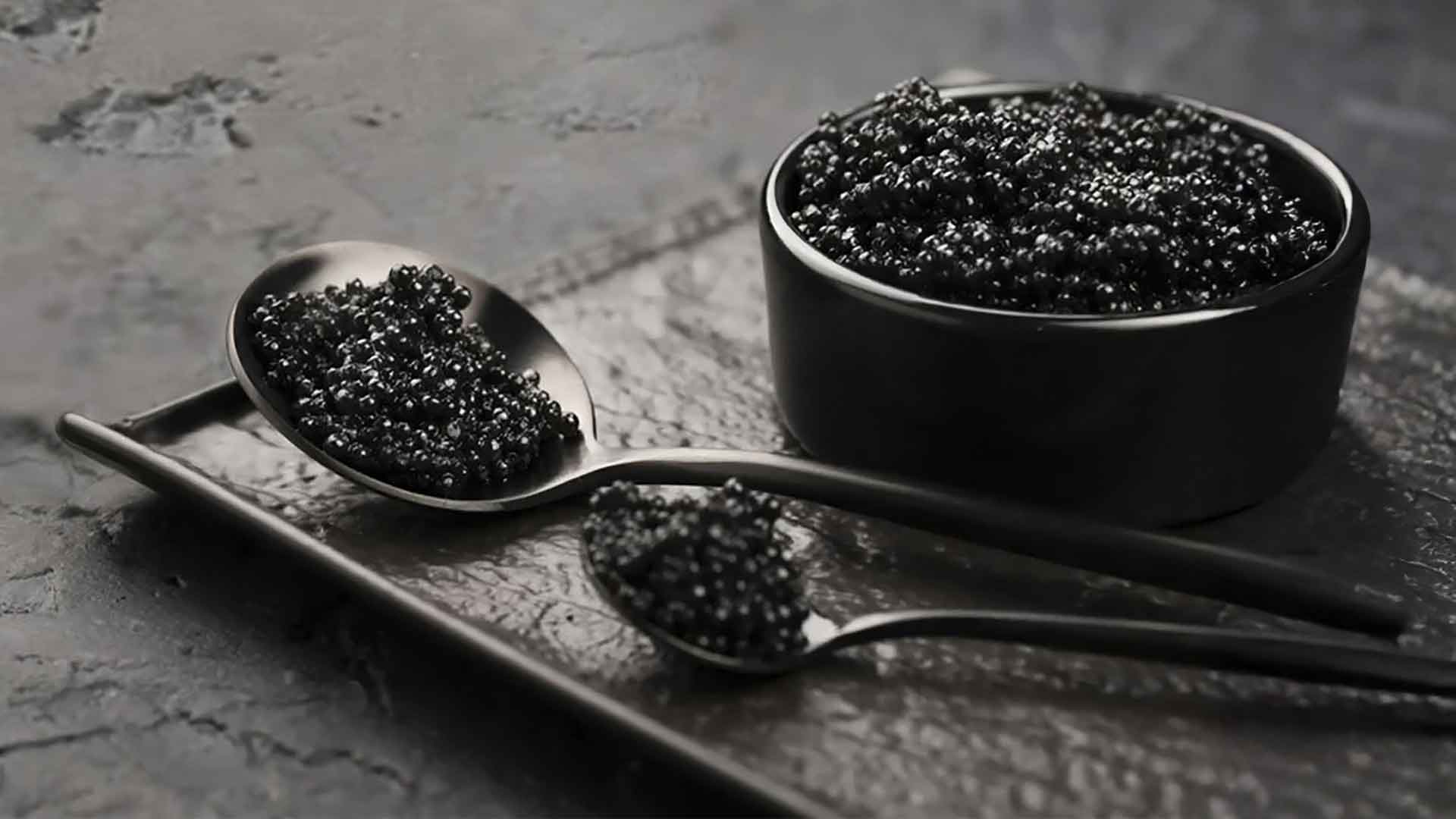
Roe Resurgence: From beluga royalty to sustainable hybrids, caviar pearls are popping on palates more than ever
Caviar, often regarded as the glistening pearls of the sea, has long been synonymous with luxury, indulgence and culinary sophistication. From the opulent courts of Russian tsars to the chic tasting rooms of haute cuisine, salt-cured sturgeon roe from the Caspian Sea carries immense cultural cachet. Although overfishing and the threat of extinction have rendered wild sturgeon from the deep waters of the Caspian or Black Sea a luxury of the past, caviar continues to be one of the most highly coveted delicacies globally. Sturgeon are now primarily raised in the controlled environment of farms and come in an increasing variety of caviar options – traditional roe, hybrids and innovative sustainable alternatives.
Understanding the nuances of caviar is essential for any discerning gourmand. True caviar is derived exclusively from sturgeon, a prehistoric fish whose roe has been valued for centuries. The elite species of sturgeon represent the gold standard of caviar, often commanding astronomical prices and reverence among connoisseurs.

Caviar’s Crown Jewel
Beluga caviar, harvested from the beluga or great sturgeon (Huso huso), is recognised as the rarest and most expensive option available. Native to the Caspian Sea, its production is heavily regulated due to conservation concerns. The female beluga sturgeon can take up to 20 years to reach maturity, making its roe a true investment in time. The eggs are the largest among all sturgeon caviar, featuring a soft, delicate texture and a buttery, nutty flavour that encompasses a melting quality on the palate. Their colour ranges from light silver to dark grey, and lighter hues from the older fish are considered more desirable.
The Connoisseur’s Choice
Oscietra caviar comes from the Russian sturgeon (Acipenser gueldenstaedtii) and is cherished for its complex flavour and medium-sized eggs. Its taste is often described as nutty, briny and slightly fruity, and its texture is firmer than beluga. Oscietra roe presents in a range of colours from dark brown to golden, with golden oscietra being particularly sought-after. Originating from the Caspian and Black Seas, and the rivers that run into them, the Russian sturgeon has proved adaptable to aquaculture practices, leading to a wider availability of oscietra caviar while simultaneously retaining its elite status.

Bold and Briny
Sevruga caviar is derived from the smallest of the major sturgeon species (Acipenser stellatus), whose daintier, darker eggs deliver a more intense and saltier flavour profile. It caters to those who favour a punchier, oceanic taste enveloped in a crisp texture. Sevruga sturgeon mature more rapidly than both the beluga and oscietra varieties, rendering it slightly more affordable and abundant in the market.
Ethical Indulgence
Kaluga caviar rivals beluga in size and richness, offering a creamy, buttery flavour complemented by a hint of earthiness. It is harvested from the kaluga sturgeon (Huso dauricus), commonly found in the Amur river basin bordering Russia and northeast China, and is often crossbred with the smaller Amur sturgeon (Sinosturio schrenckii) to create sustainable hybrid options. Sometimes dubbed ‘river beluga’, kaluga roe is increasingly favoured among chefs and consumers for embodying ethical luxury while maintaining exceptional quality.

Beyond the Classics
While beluga, oscietra and sevruga dominate the conversation around luxury caviar, other lesser-known sturgeon species present unique and accessible options for caviar enthusiasts. The caviar of the Siberian sturgeon (Acipenser baerii) is notable for its earthy, robust flavour and smaller eggs. It is a favoured product among sustainable farms in France, Italy and China, where controlled environments ensure consistent quality. The roe typically ranges from dark grey to black and presents a clean finish.
Indigenous to the North American Pacific coast, the white sturgeon (Acipenser transmontanus) yields medium-sized, dark grey roe with a creamy and nutty flavour profile. It serves as the backbone of the American caviar industry, particularly flourishing in California’s aquaculture sector. Once reserved for Russian royalty, sterlet caviar offers a delicate and rare product. Its eggs are notably small and pale, accompanied by a subtle flavour appealing to culinary purists. While not widely available, sterlet caviar represents a historical gem worthy of pursuit.

Roe by Any Other Name
Although true caviar must derive from sturgeon, the term has broadened to encompass the salt-cured eggs of other fish species. These varieties offer vibrant colours, bold flavours and culinary versatility. Predominantly featured in Japanese cuisine, salmon roe (ikura) is large, bright orange and bursting with briny flavour. Frequently served atop sushi or blinis, ikura adds a festive flair to any dish.
Trout roe is smaller and milder than its salmon counterpart, displaying a golden hue and gentle pop. It has gained popularity as a preferred choice for canapés and garnishes, providing a more accessible entry point into the world of roe. Characterised by its tiny composition and crunchy texture, the greenish-brown lumpfish roe is commonly dyed black or red and utilised as a garnish. While it may not be considered luxurious, it remains a popular option for enhancing the texture and appearance of hors d’oeuvres.
Flying fish (tobiko) and capelin roe (masago) – a type of smelt – frequently feature in sushi dishes. Smaller than ikura, they present subtle flavour profiles alongside crunchy textures. Tobiko is a golden colour, while the naturally paler-yellow masago is often creatively flavoured or coloured to serve as a playful addition to fusion dishes.

The Greening of Caviar
With sustainability and ethical sourcing at the forefront of luxury dining, the caviar industry is evolving with innovative techniques and hybrids. Traditional caviar harvesting necessitates sacrificing the fish; however, no-kill methods such as massage or cesarean extraction allow for the collection of roe without harming the fish. Although controversial among purists, such techniques are gaining traction among eco-conscious consumers.
Vegan caviar comprising seaweed, vegetables or tapioca mimics the aesthetic and tactile qualities of traditional caviar. While it may fall short in depth of flavour, it offers a cruelty-free alternative for plant-based diners.
Pure Indulgence
It is recommended to serve caviar chilled and unadulterated ¬– on a mother-of-pearl spoon to preserve its delicate flavour or eaten straight from the back of the hand. Roe connoisseurs may roll their eyes at presenting it atop a blini with a dollop of crème fraiche, though these neutral accompaniments allow the caviar’s character to shine while providing creamy texture.
Caviar is best enjoyed with Champagne or vodka. The crisp acidity and effervescence of fine sparkling wine cleanse the palate while highlighting the richness of the roe. In the classic Russian pairing, vodka’s clean profile complements caviar’s briny notes. Contemporary chefs are increasingly plating caviar with oysters, scallops and even wagyu beef, pushing the boundaries of culinary experiences.

Redefining Roe
Caviar production has expanded in recent decades beyond its traditional sources of Russia and Iran. French caviar houses are known for producing high-quality Siberian and Oscietra caviar with an emphasis on sustainability. In Italy, the Calvisius brand offers refined white sturgeon caviar. China has emerged as a significant player with farms producing kaluga caviar and hybrid varieties.
As climate change, overfishing and ethical concerns reshape the landscape of luxury food, caviar is experiencing a renaissance. Innovations in aquaculture, genetic breeding and harvesting techniques are making this exquisite delicacy more sustainable and accessible without compromising its quality. For the modern epicurean, caviar has transcended its role as merely a symbol of wealth; it now represents a celebration of craftsmanship, ecology and refined taste.