

Still Supreme: Strictly crafted by houses suffused with history, Cognac is the legacy spirit par excellence
Perhaps more than any other spirit, Cognac embodies true luxury and the old-money perception of value that extends beyond trend or display. It is not chosen for spectacle or consumed speedily, but selected deliberately, poured sparingly, and understood as an inheritance rather than an indulgence.
To know this superior brandy properly begins with its origin. Unlike many prestige spirits whose identity is shaped by marketing, Cognac is defined first by geography. It is produced in a tightly regulated region of southwestern France under strict rules governing grape varieties, distillation and ageing. Only white varietals – primarily Ugni Blanc – grown in the Cognac appellation can be used to make wine that has to be double-distilled in a traditional copper pot still before 31 March in the year following the harvest. The resulting eaux-de-vie must age for a minimum of two years in French oak barrels.
Within this framework, Grande Champagne and Petite Champagne – the most revered of the six Cognac crus – stand apart for their chalky soils and exceptional capacity for long maturation.
Serious expressions begin where most spirits conclude, often incorporating eaux de vie aged for several decades before blending. Some reserves were laid down by cellar masters long deceased, intended not for immediate consumption but for future generations. This long view resonates deeply with old money values, where patience, stewardship and continuity outweigh immediacy. Cognac does not reward haste; it reveals itself slowly, layer by layer.
Class in a Glass
The great Cognac houses function less as brands than as institutions. Hennessy, Rémy Martin, Mar tell and Courvoisier each carry centuries of accumulated cultural capital and maintain distinct philosophies shaped by history and blending style. Rémy Martin’s commitment to Fine Champagne Cognac (dual cru blends of at least 50 per cent Grande Champagne plus Petite Champagne); Martell’s emphasis on precision and elegance through its distillation of clear wine (without lees); and Hennessy’s unparalleled reserves and global influence are not interchangeable qualities. Understanding these distinctions signals lineage and literacy, not spending power.
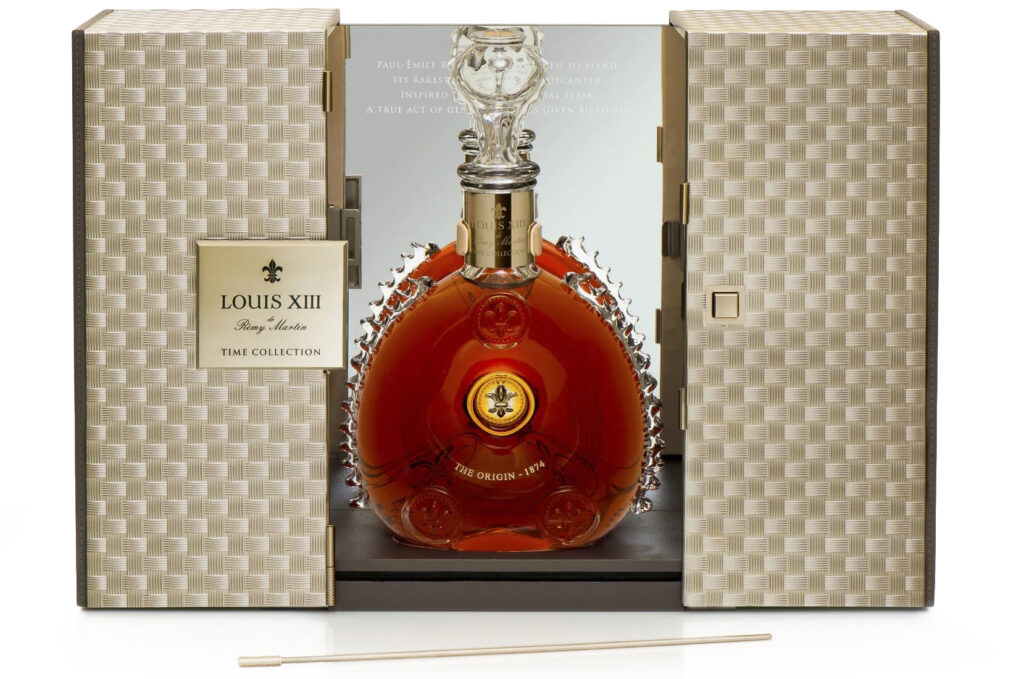
Rarity in Cognac is rooted in irreversibility and permanence. When ancient eaux de vie are blended into a final expression, they cease to exist as individual components. This gives Cognac a gravity that appeals to collectors who value scarcity grounded in reality rather than marketing. Bottles such as Rémy Martin Louis XIII or Hennessy Richard Hennessy command reverence not for their visibility, but because they contain time that cannot be replaced.
Substance Imbued
Packaging, while undeniably refined, is understood as secondary. Hand-blown crystal decanters and bespoke presentation cases serve as custodians rather than distractions. In old-money circles, excessive ornamentation without substance is quietly dismissed. What matters is the liquid’s depth, balance and provenance. A Cognac’s true prestige is revealed not at first glance, but over the course of an evening.
It further secures a place within the portfolios of the ultra-wealthy because of its collectability. Rare, discontinued expressions and historic releases often appreciate steadily, their worth anchored in age, scarcity and documentation. Unlike trend-driven luxury assets, Cognac is immune to rapid obsolescence. Once a reserve is depleted, it cannot be replenished. This finality aligns Cognac naturally with fine art, rare books and important watches – objects valued not only for beauty, but for irreplaceability.
Discretion and Value
Modern luxury’s quest for personalisation has also reshaped Cognac. Today’s elite increasingly seek experiences that reflect individual identity rather than public recognition. Private cask selections, bespoke blends and confidential collaborations with major houses allow families and collectors to create something singular. These expressions are rarely publicised. Their worth lies in discretion, known only to those at the table.
Above all, Cognac represents quiet power. It is the tipple of those who no longer equate visibility with success. A glass poured in a library, aboard a yacht at anchor, or after a concluded negotiation suggests mastery over time. For legacy families and the ultra wealthy who value continuity over display, Cognac endures as more than a drink. It is a philosophy in liquid form that is measured, enduring and profoundly self-assured.