

Aztec Aspect: Timeless marvels abound in Mexico’s highlands, from the peaks of Puebla to Oaxacan mezcal and mole
The heart of Mexico beats loudest in its central highlands and the rugged valleys of Oaxaca in the southeast. A perfect winter sanctuary between October and February, the region offers a mesmerising tapestry of indigenous traditions, Spanish colonial architecture, world-class gastronomy and breathtaking natural wonders.
Far removed from the beach resorts of the Yucatan Peninsula, Central Mexico and Oaxaca provide an authentic dive into the country’s profound cultural soul. From the high-altitude metropolis of Mexico City to the cobblestone streets of Puebla and the sun-drenched valleys of Oaxaca, this trans-regional corridor represents the absolute pinnacle of Mexican art, history and culinary genius.
City Tour
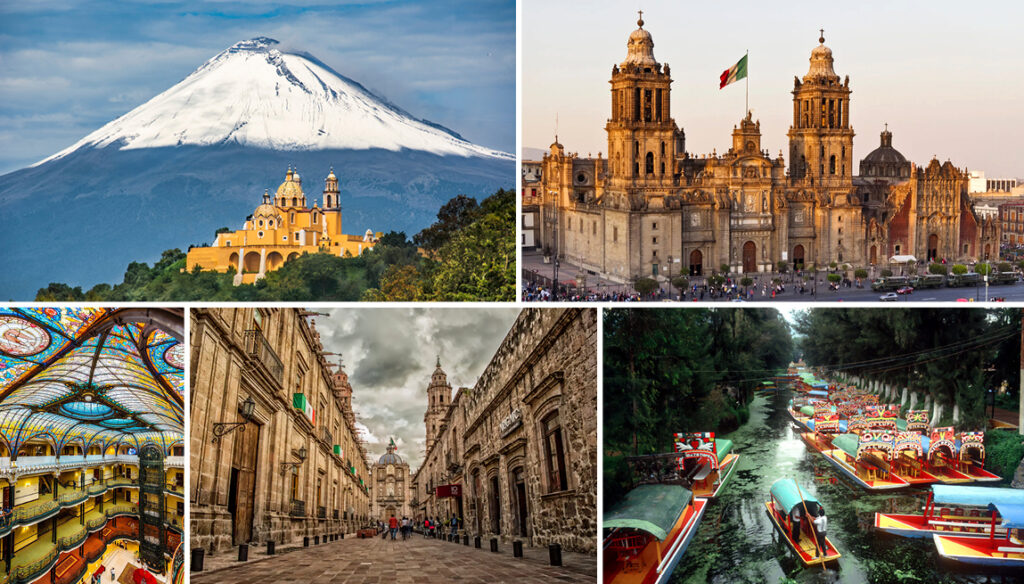
Any comprehensive exploration of Central Mexico must begin in Mexico City, a sprawling modern-day megalopolis built directly over the ruins of the ancient Aztec capital of Tenochtitlan. The city is a treasure trove of historical layers. In the central square, or zócalo, the grand Metropolitan Cathedral stands shoulder to shoulder with the excavated ruins of the Templo Mayor, once the spiritual heart of the Aztec Empire.
Walking through the leafy avenues of neighbourhoods like Roma and Condesa reveals a stunning collection of French-inspired Art Nouveau and Art Deco architecture from the early 20th century. Further south, the historic canals of Xochimilco offer a glimpse into ancient pre-Hispanic agricultural techniques, where brightly coloured wooden boats called trajineras glide past floating gardens known as chinampas.
Spain Remains
Leaving the capital and heading southeast brings you to Puebla, a majestic colonial city nestled beneath the snow-capped peaks of the Popocatépetl and Iztaccíhuatl volcanoes. Puebla is a masterpiece of Spanish Baroque urban planning, and its historic centre is blanketed in brilliant, hand-painted Talavera tiles that catch the high-altitude sunlight.
Directly adjacent is the twin town of Cholula, home to Tlachihualtepetl, the Great Pyramid of Cholula – the largest pyramid by volume in the world today. The Spanish built a splendid yellow Catholic parish church, the Iglesia de Nuestra Señora de los Remedios, directly on top of this massive indigenous structure, creating one of the most iconic and visually striking architectural juxtapositions in all of the Americas.

Ancient Oaxaca
Descending further south into the Sierra Madre mountains reveals the crown jewel of southern Mexico – Oaxaca de Juárez. Located in a fertile valley surrounded by jagged peaks, Oaxaca city is a living monument to the Zapotec and Mixtec civilisations, whose descendants make up the majority of the local population.
Time slows down in the historic centre. Built from a distinct green volcanic stone called cantera verde, it radiates out from the lively zócalo, where marimba bands play under the shade of massive laurel trees. Nearby, the Church of Santo Domingo de Guzmán, with its hyper-detailed gold-leaf interior, serves as a towering symbol of a place that lives and breathes artistic expression.
Just a short drive outside Oaxaca de Juárez lies Monte Albán, one of the earliest primary cities in Mesoamerica. Carved out of a flat mountaintop 2,500 years ago, this ancient Zapotec capital overlooks the entire Oaxacan valley. Walking among its grand stone plazas, astronomical observatories and ball courts conjures a profound sense of the engineering marvels achieved by pre-Columbian societies long before European contact.
Mole Valleys
It is in the high-altitude valleys of Central Mexico and Oaxaca that the country’s treasured ancient culinary techniques thrive. The absolute bedrock of this gastronomy is heirloom corn, nixtamalised using traditional Mesoamerican methods to unlock its nutrients and create the perfect dough, or masa, used for tortillas, tamales and tlayudas.
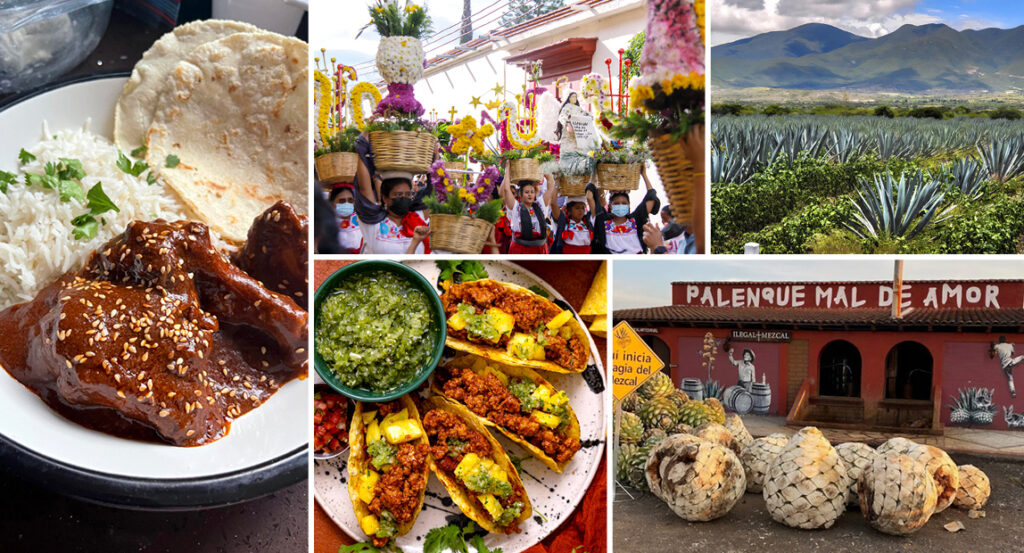
Oaxaca is widely celebrated as the land of the seven moles, incredibly complex, slow-simmered sauces that combine dozens of ingredients, including toasted chillies, nuts, seeds, dried fruits, fresh herbs and bitter Mexican chocolate. In the most famous variant, Mole Negro, the rare, smoky chilhuacle pepper, burnt tortilla ashes and Oaxacan chocolate combine to create a rich, velvety indulgence. In Puebla, a parallel culinary rivalry exists with Mole Poblano, a sweeter, red-brown variation often served over chicken and sprinkled with toasted sesame seeds.
Munchies and Mezcal
Street food across this region is an art form. Tacos al pastor, another Puebla speciality, features thinly sliced pork marinated in dried chillies and achiote, shaved off a vertical spit directly into a fresh corn tortilla with a slice of pineapple, cilantro and raw onions. In Oaxaca, the undisputed street-food king is the tlayuda – a large, crisp, toasted corn tortilla smeared with asiento (unrefined pork lard), refried black beans and shredded quesillo, then topped with grilled meat.
To accompany these late-night feasts, one must turn to mezcal, the artisanal spirit that defines Oaxacan liquid culture. Unlike tequila, which is produced industrially from a single agave species, mezcal is crafted entirely by hand from dozens of wild and cultivated agave varieties. The agave hearts, or piñas, are roasted in conical earthen pits lined with volcanic stones and oak charcoal, giving the spirit its signature, intensely smoky notes. At a traditional, family-run distillery, or palenque, in Santiago Matatlán, an hour’s drive southeast of Oaxaca city, varietals like Espadín, Tobalá and Tepeztate can be tasted directly from the terracotta stills.
Craft Pleasures
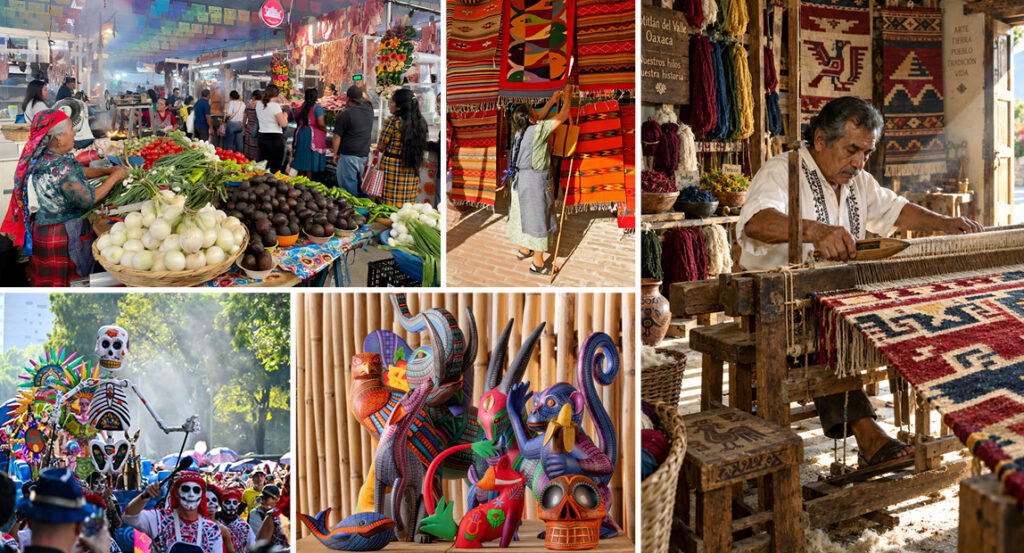
Shopping here is a direct encounter with multi-generational families who have preserved ancient artistic techniques for centuries. The Oaxaca valley is organised into specialised artisan villages, each dedicated to a singular craft. In Teotitlán del Valle to the east, Zapotec weavers use foot-powered wooden looms to create breathtaking wool rugs and tapestries. The wool is dyed using natural ingredients harvested from the surrounding countryside: brilliant reds come from cochineal, a tiny insect that lives on nopal cacti; deep blues from wild indigo; and warm yellows from marigold petals.
A short drive south of the city brings you to San Bartolo Coyotepec, renowned for its barro negro, or black pottery. Artisans shape the local clay completely by hand without a potter’s wheel, rubbing the exterior with a quartz stone before firing it in underground pits to achieve a striking, metallic black sheen. Further south in San Martín Tilcajete, craftsmen carve copal wood into fantastical, brightly painted spirit animals known as alebrijes.
Sunday in Tlacolula de Matamoros welcomes one of the oldest continuously operating open-air markets in Mesoamerica. Here, indigenous vendors from remote mountain villages descend into the valley to sell fresh produce, wild honey, hand-carved wooden whisks and blocks of raw Oaxacan chocolate laced with cinnamon and almonds.
Mexican Faves
The winter months represent the golden window for travel in Central Mexico and Oaxaca. During this post-rainy season, the mountain valleys are incredibly green, skies are a crisp, cloudless blue, and daytime highs hover around a comfortable 26 degrees Celsius, though night temperatures in the mountains can drop significantly.
Visiting over the last weekend of October allows you to witness Día de los Muertos, or Day of the Dead, when families cover cemeteries and home altars in yellow marigolds, sugar skulls and incense to guide the souls of ancestors back to the earthly realm. On 23 December, Oaxaca hosts the whimsical Noche de Rábanos, where artisans carve oversized radishes into complex religious and historical scenes.
No matter which month you travel, sitting in a candle-lit Oaxacan courtyard at the end of the day, sipping a smoky mezcal amid the scent of roasting chillies and copal incense, the realisation will dawn that this region is the emotional and creative anchor of the North American continent.