
Come Each May: Diplomatic coup turned cultural tour de force, the annual French festival deserves our applause
Emerging from a diplomatic and artistic vision to build a bridge between France and Asia, the French May Arts Festival stands today as one of Hong Kong’s most influential annual cultural events. It was conceived in 1993 by the Consulate General of France in Hong Kong and Macau, together with Alliance Française de Hong Kong, as a month-long celebration of French creativity designed to deepen cultural exchange and mutual understanding.
From the outset, French May was more than a programme of performances and exhibitions. It was a statement of intent, affirming that art could serve as a conduit between histories, geographies and identities. The atmosphere was intimate yet purposeful. Organisers sought not merely to entertain but to cultivate curiosity and sustained engagement.
Programming first centred upon classical music recitals, French cinema screenings and carefully curated art exhibitions. The aim was to introduce Hong Kong audiences to a broad spectrum of French artistic expression, from canonical masters to emerging contemporary voices. Then, as it returned each spring, the festival began establishing itself as a dependable fixture within the city’s cultural calendar, nurturing loyal audiences while building trust with local institutions and creative partners.
Even in its formative stage, French May’s ambition extended beyond presentation. The founders envisioned Hong Kong as a meeting point between European heritage and Asian dynamism, and the festival structure reflected this aspiration. Events were distributed across venues that symbolised the city’s evolving identity, including historic concert halls, modern galleries, university campuses and independent cinemas.
Through this citywide presence, French May embedded itself within Hong Kong’s creative ecosystem rather than remaining a visiting showcase. It gradually became part of the rhythm of urban cultural life, anticipated by artists and audiences alike.

Masters of Paris
As the festival matured, its scope expanded with confidence and clarity. Flowing beyond the confines of May, it became a two-month spectacle. Major exhibitions began arriving from renowned French museums and cultural institutions, showcasing significant works in painting, sculpture, photography and design. Audiences encountered masterpieces that might otherwise have required travel to Paris, Lyon or Marseille.
This access reinforced Hong Kong’s position as an international arts hub while underscoring the festival’s commitment to excellence. With each ambitious exhibition, French May strengthened its reputation as a platform capable of presenting museum-quality experiences on a global scale.
The performing arts flourished alongside visual programming. Contemporary dance and theatre joined the established pillars of music and art, broadening the festival’s artistic vocabulary. Classical repertoire coexisted with avant-garde experimentation. A baroque ensemble might be followed by a boundary-pushing multimedia production.
This juxtaposition reflected an understanding of culture as living and evolving rather than static and preserved. French May has long embraced heritage and innovation in equal measure, allowing audiences to encounter centuries-old traditions alongside bold contemporary interpretations.
Community Care
Partnership became central to the festival’s enduring success. Collaborations with local museums, universities, orchestras, galleries and performance venues ensured deep integration into Hong Kong’s cultural fabric. These alliances transformed French May from a diplomatic initiative into a shared civic enterprise.
Educational initiatives further strengthened this role. Artist talks, masterclasses, workshops and school outreach programmes enabled students and emerging practitioners to engage directly with visiting creatives. For many young musicians and visual artists, these encounters provided formative moments of inspiration, mentorship and professional connection.

The launch of French GourMay in 2009 marked another significant evolution. Recognising that culture extends beyond galleries and concert halls, organisers welcomed gastronomy as an expressive art form in its own right. Each year, a specific French region is highlighted, bringing its culinary traditions, wine heritage and artisanal craftsmanship to Hong Kong’s restaurants and dining rooms.
For May 2026, the high-altitude tastes of Savoie in the French Alps can be sampled at selected spots all over town. Participating chefs collaborate on themed menus, while tastings and demonstrations invite the public to explore the sensory dimensions of French culture. Through food and wine, French May reinforces the idea that creativity permeates everyday life.
International Relationships
Over time, the festival gained substantial international recognition. Large-scale exhibitions and headline performances by acclaimed orchestras, ballet companies and contemporary ensembles attracted significant audiences. The annual programme frequently encompasses more than 100 events, reflecting both ambition and sustained demand. As Hong Kong strengthened its global arts profile, French May contributed meaningfully to that reputation, positioning the city as a crossroads where East and West engage in sustained artistic dialogue.
Recent editions have extended across spring and early summer, allowing deeper engagement across disciplines. Large exhibitions animate museum spaces, while theatres welcome international performers. Community participation continues to grow, and collaborations between French and Hong Kong artists have intensified. These co-productions underscore the festival’s evolution from presentation to partnership, and from invitation to genuine dialogue shaped by shared experience.
Renaissance Now
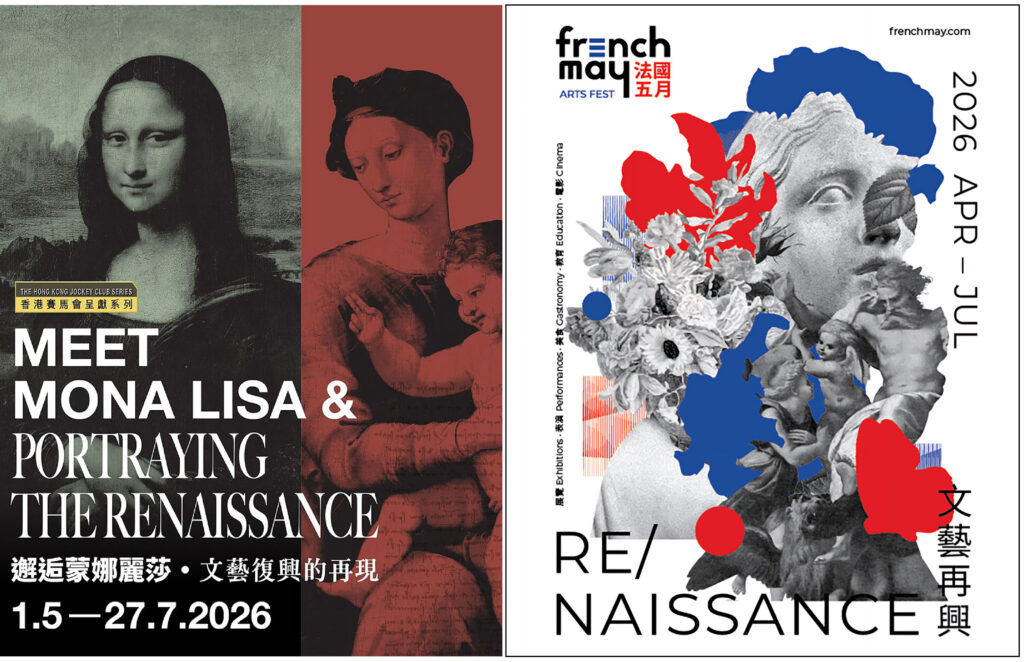
This year’s centrepiece exhibition exemplifies this trajectory. As French May 2026 adopts the theme Re/naissance, calling for creative renewal and rediscovery and new rushes of imagination, the Hong Kong Jockey Club Series at the Hong Kong Heritage Museum has been curated as a visual hybrid. Meet Mona Lisa, an immersive digital journey by the Louvre and Grand Palais Immersif, is paired with a gallery of masterpieces, Portraying the Renaissance, where holographic storytelling and multi-sensory experiences enrich Leonardo da Vinci’s intricate drawings.
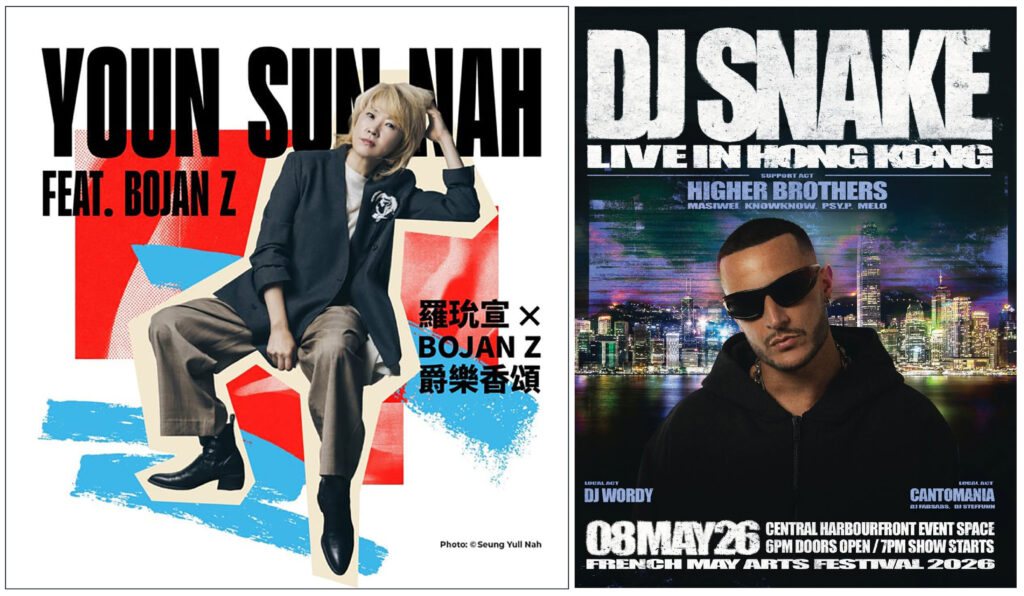
Music remains at the core of the programme. The multigenre mix assembled for 2026 includes Vienna Philharmonic Orchestra bassoon soloist Sophie Dervaux performing baroque and classical concertos with the City Chamber Orchestra of Hong Kong; jazz star Youn Sun Nah taking the stage with pianist Bojan Z; and French electronic icon DJ Snake unleashing his vibe at the Central Harbourfront.
Through such varied concerts, audiences experience the breadth of French musical identity, spanning centuries and stylistic movements, and discover unexpected connections between tradition and experimentation.
Dance and theatre provide equally daring narratives, affirming French May’s role as a forum for shared storytelling and cross-cultural resonance. Belgian choreographer Jan Martens challenges dance conventions with The Dog Days Are Over 2.0, while Hong Kong Dance Company and guest performer Ivana Wong bring a contemporary Chinese art master’s works to life for In Between – Wu Guanzhong’s Ink Odyssey. Fresh from France’s National Centre for Circus Arts, Cirque du Corbak unveils the acrobatic drama of Voûte in Tai Kwun.
A Bridge So Far
Sustainability has emerged as a meaningful thread within recent programming. Environmentally conscious exhibition design, responsible sourcing within culinary events, and discussions on sustainable artistic practice reflect broader global priorities. By integrating ecological awareness into its presentation, the festival demonstrates responsiveness to contemporary concerns while maintaining artistic excellence.
Looking across its evolution, French May reveals a steady arc of ambition, resilience and partnership. What began as a diplomatic initiative has grown into a landmark multidisciplinary festival shaping Hong Kong’s international cultural identity. Its success lies not only in scale but in continuity, in the annual reaffirmation of dialogue between France and Hong Kong through art, education and shared celebration.
Today, French May stands as a testament to the enduring power of artistic exchange. It fosters creative networks, inspires audiences, and strengthens cross-cultural understanding. By balancing heritage with innovation, and tradition with experimentation, it continues to redefine what a cultural festival can achieve. More than a celebration of French art, French May is a living bridge, built not of stone or steel, but of imagination, collaboration and enduring connection.