

Golden Dragon: From poet to paddlers – festive racing in Hong Kong waters marks 50 years of global evolution
There are few spectacles in Hong Kong as arresting as dragon boats slicing through Victoria Harbour. The sound arrives before the sight: a deep, rhythmic drumbeat echoing across the water, steady and commanding. Then come the paddles, rising and falling in disciplined unison, blades flashing beneath a skyline that symbolises speed, ambition and reinvention.
It’s a scene that feels both ancient and electric, and this summer, it carries added resonance as the city celebrates the 50th milestone of its International Dragon Boat Festival, marking a journey that transformed a ritual into a global lifestyle phenomenon. On the weekend of 27-28 June, the Tsim Sha Tsui Promenade will hum with anticipation as crowds cheer on teams from all over the world in races that mark the golden anniversary of an iconic waterborne sporting event.

The Dragon Boat, or Tuen Ng, Festival traces its roots back more than two millennia, observed on the fifth day of the fifth lunar month and said to commemorate esteemed poet Qu Yuan (circa 340–278 BC). Banished and accused of treason, Qu Yuan threw himself into the Miluo River in northern Hunan, an action that incited locals to race out in their boats in a failed attempt to save him. The tradition of consuming sticky rice dumplings during the holiday stems from balls of rice dropped into the water by villagers to deter fish from eating the fallen hero’s body.
In Guangdong’s river communities, paddle-boat racing was once inseparable from ritual. Long boats carved from solid timber were adorned with fierce dragon heads and painted in brilliant colours. Before touching water, they were awakened through eye-dotting ceremonies believed to invite protective spirits. Villagers raced not only for pride but for blessing, unity and communal strength.

Racing Through Centuries
This tradition unfolded in the narrow inlets and fishing harbours of Hong Kong’s early coastal settlements. The races were intimate, sacred and profoundly local. As participation widened over many decades, dragon-boat racing evolved into more than a celebration of folklore and a contest of speed.
Corporate teams embraced it as a test of teamwork and endurance. Universities formed clubs that blended athletic ambition with cultural exploration. Community organisations found in it a platform for inclusion and cross-cultural connection. In the months and weeks before the Tuen Ng Festival, training sessions at dawn and on Sundays in the sea off Shau Kei Wan and Stanley became rituals in themselves, transforming colleagues and classmates into crews bound by rhythm and trust.
As the city evolved into an international metropolis, the question arose of how such customs would survive in a new world of global finance. Rather than allowing dragon-boat racing to recede into nostalgia, Hong Kong propelled it forward. Local races customarily held in bays and typhoon shelters during the festival, which falls on 19 June this year, were extended to include open races in Victoria Harbour over a later weekend. Inviting overseas teams to compete in these events shaped the narrative entirely.
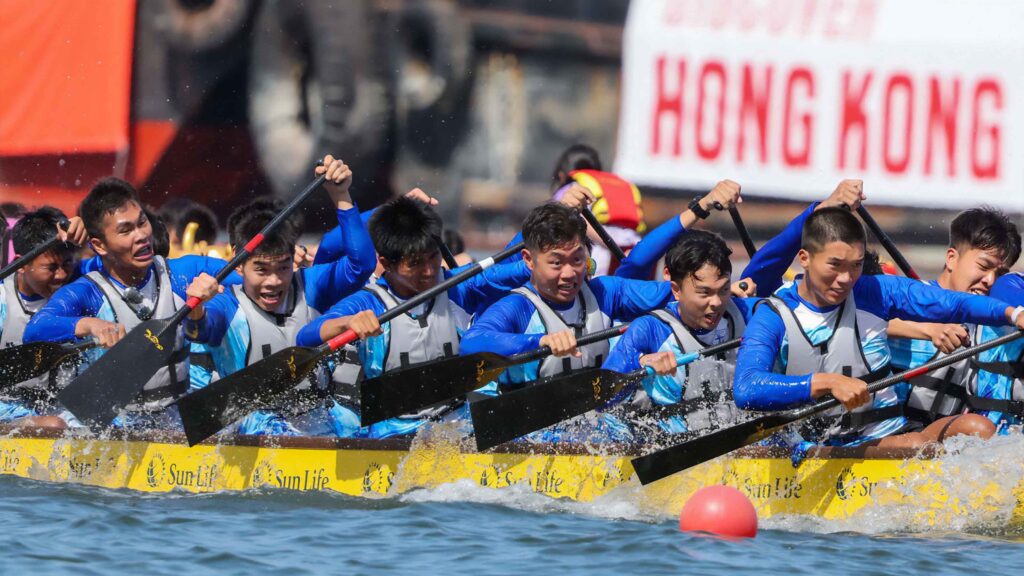
International Beat
Against a backdrop of mirrored skyscrapers and busy ferry lanes, dragon boats appeared both timeless and startlingly modern. The harbour became a theatre, framing an ancient cultural practice within a cosmopolitan stage. International crews arrived curious and departed inspired, carrying stories of synchronised paddles and ceremonial drums back to their own cities. Dragon-boat clubs began forming across North America, Europe, Australia and beyond. What had once been anchored to regional waterways now travelled freely across continents.
Under the auspices of the International Dragon Boat Federation since 1991, the sport has been adapted through globally standardised race distances and lighter vessels. Carbon-fibre boats replaced heavy wooden hulls for international competition, ensuring accessibility and consistency. Yet Hong Kong guarded the tradition’s symbolic core. Eye-dotting rituals continued. Incense curled beside the water before major heats. The drummer remained at the bow, setting pace and purpose. Modern sport grew from ancient channels without severing its ties to the past.
The harbour setting of the International Dragon Boat Festival amplified everything. Photographs of dragon boats surging forward beneath a forest of skyscrapers circulated globally, encapsulating Hong Kong’s dual identity. The visual contrast was irresistible: traditional dragon motifs glinting in sunlight against steel and glass. International media coverage magnified the spectacle, embedding the festival within the world’s sporting and cultural calendars.
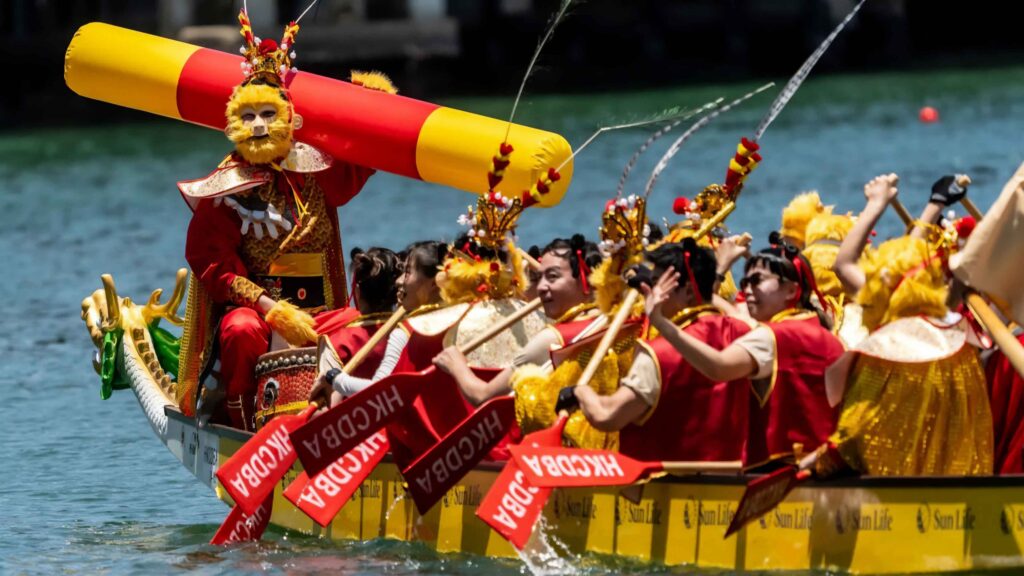
Strokes of Harmony and Strength
Over time, the event grew into a waterfront carnival of colour, sound and taste. Spectator stands expanded along the promenade. Food vendors filled the air with the fragrance of bamboo-wrapped zongzi, the pyramids of sticky rice stuffed with pork belly and egg yolk that are synonymous with the festival. Musicians performed against panoramic harbour views. Families arrived early and lingered long after the final heat, drawn as much by atmosphere as by competition.
Yet for all its pageantry, dragon-boat racing remains intensely physical. Twenty paddlers sit shoulder to shoulder, guided by a steersperson and driven by the drummer’s cadence. Synchronisation is everything. A fraction of hesitation can break momentum, while perfect harmony can propel a crew forward with breathtaking speed. The discipline required is immense: muscles burn; hands blister; breathing must align with stroke and rhythm. It is sport distilled to collective precision.
Dragon-boat racing mirrors the balance of endurance and unity that resonates deeply within Hong Kong, a city where heritage and innovation, East and West, thrive. It invites international participation while affirming local identity; it celebrates athletic excellence while preserving ritual symbolism. Few events manage this equilibrium with such vibrancy. As the festival’s reputation expanded, so did its prestige. Competing in Victoria Harbour became a badge of honour within the global dragon-boat community. Teams trained year-round for the opportunity to race where modern international competition first flourished.
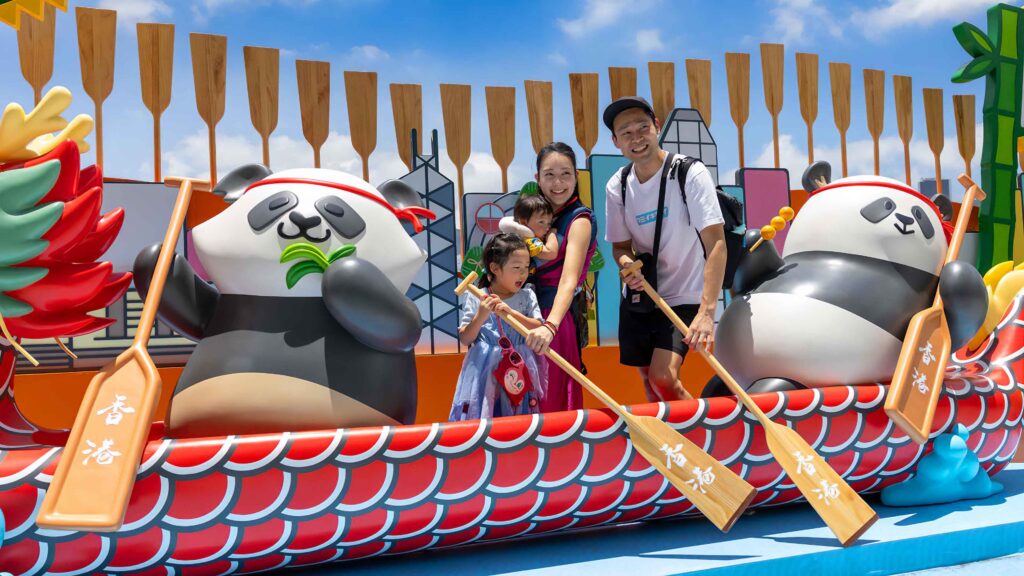
Shoreline Spectacle
This summer’s golden milestone heightens that sense of occasion, offering not only thrilling races but reflection on transformation. Special installations along the waterfront trace the journey from carved village boats to streamlined racing shells. Archival images reveal modest early gatherings evolving into today’s international spectacle. Veteran paddlers share stories of first races and lifelong friendships forged through shared exertion.
Visiting teams parade flags representing continents, underscoring the sport’s extraordinary reach. Evening light displays shimmer across the harbour, casting dragon silhouettes against illuminated towers. The atmosphere feels celebratory yet reverent, acknowledging history while embracing momentum.

Ancient & Modern
Fifty years of international growth have transformed Hong Kong’s Dragon Boat Festival into a defining cultural expression, demonstrating that tradition need not stand still to survive. By inviting the world into its waters, Hong Kong ensured that an ancient ritual would evolve rather than fade. The festival became a bridge, connecting fishermen’s chants with global athletic ambition.
As spectators gather along Victoria Harbour this June, they will witness more than competition. They will see heritage in motion, powered by discipline and shared purpose. They will taste rice dumplings wrapped in memory and hear drumbeats that echo across generations. They will watch dragon heads rise proudly against a backdrop of glittering towers, fierce and luminous.
In those moments, the city reveals itself. Hong Kong is rhythm and reinvention, resilience and reach. Its dragon boats embody that spirit – rooted yet restless, ceremonial yet contemporary. And as the golden celebration unfolds, the message carried across the harbour is clear: some traditions grow stronger with every stroke, gathering the world into their wake and racing confidently toward the horizon.